Soundtrack Information
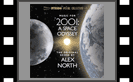
Music From
Music By
Purchase Soundtrack
Track Listing
Related Albums
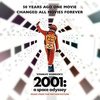
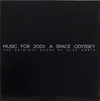
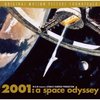
Music for 2001: A Space OdysseyLimited Edition of 2,001 Copies
MondoReleased: September 21, 2014
Format: Vinyl (37 min)
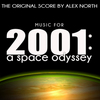
2001: A Space Odyssey - Unused ScoreVinyl Edition Limited to 500 Copies
Dylanna MusicReleased: April 2013
Formats: CD, Digital, Vinyl (38 min)
Varese Sarabande: 40 Years of Great Film Music 1978-2018Varese Sarabande
Released: November 16, 2018
Format: CD (155 min)
Fimucite 2: Festival Internacional de Musica de Cine de TenerifeLimited Edition of 1,000 Copies
Varese Sarabande Club (VCL-1113)Released: October 4, 2010
Format: CD (69 min)
The Best of the Movies - Themes and Music from All-Time Epic FilmsCapitol Records
Released: July 12, 2005
Formats: CD, Digital (112 min)
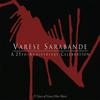
Varese Sarabande: A 25th Anniversary CelebrationVarese Sarabande (302 066 460 2)
Released: 2003
Format: CD (300 min)
Dr. Strangelove... Music from the Films of Stanley KubrickSilva America (SSD 1097)
Released: 1999
Format: CD (72 min)

The Black Motion Picture ExperienceSoundtrack Classics
Released: 1973
Formats: CD, Digital, Vinyl (31 min)
Review: 2001: A Space Odyssey - The Original Score
4 / 5 Stars
Just last month, Intrada Records released the original recording of Alex North\'s famously rejected score for Stanley Kubrick\'s 2001: A Space Odyssey. Did you catch that? This is a release of North\'s original recording of the score, not a re-recording. I want to stress that point because it took me a while to realize exactly what Intrada was offering – no less than an important piece of film music history.
Perhaps the best part of this release (and why I would recommend it even if you have a different recording) are the CD liner notes. Jon Burlingame and Nick Redman have done detailed research and written wonderfully engaging and informative notes, the kind we so often wish for with score releases and so often miss. One of the more fascinating tidbits we learn from their notes is that this recording was left to decompose for so long because of struggles between North\'s widow (North having died in 1991) and 2001 director Stanley Kubrick. But now that they have both passed away, we can be the beneficiaries of the wealth of their estates.
For the past fifteen years, we have heard North\'s score through Jerry Goldsmith\'s work resurrecting it following North\'s death. His version is masterful and opened up a world that had lain dormant for thirty years. But this release offers something new – here is the music, conducted by composer Henry Brant, that North expected to hear when he went to the premiere in 1968. Try to imagine this scene: Alex North composed the music, had it recorded and timed to the movie, and sat down in the New York theater expecting to hear his score, only to have the strains of Strauss\'s Also Sprach Zarathustra wash over him. An apocryphal story? Perhaps, but North later related: "Well, what can I say? It was a great, frustrating experience, and despite the mixed reaction to the music, I think the Victorian approach with mid-European overtones was just not in keeping with the brilliant concept of Clarke and Kubrick."
North should have been comforted to discover that Györgi Ligeti had a similar experience, but he was surprised to hear his music in the movie as his permission was never asked. Ligeti related, "They took the music from my recordings. I knew nothing about it. When I heard about the film I wrote MGM and producer Stanley Kubrick. They wrote back, \'You should be happy. With this movie you have become famous in America.\' I wrote back: \'I am not happy. You took my music and you did not pay me.\' But I didn\'t want to sue. I am not so commercial. Lawyers met. In the end I got $3,500."
North could have certainly commiserated with Ligeti in the type of experience, but North knew that Ligeti\'s music was at least under consideration as it was in the temp track. In fact, one of the more interesting features of this new release is that it shows how closely North followed the musical impressions made by the music Kubrick ultimately left in the film. "Moon Rocket Bus," one of the most successful and interesting of North\'s original cues, has the same close, dissonant choral writing as Ligeti\'s Lux Aeterna. In fact, to my ears it sounds as though North may even have used a similar countrapuntal procedure to produce the ethereal effect.
The recording shows other moments of indebtedness to the temp track. With the exception of Ligeti\'s compositions, most of the music Kubrick selected was firmly in the Germanic tradition, a tradition of expanded orchestral sounds. This recording contains a larger brass and percussion presence, surely a nod to Richard Strauss. Listen closely to the mixing of "Eat Meat and Kill." The timpani and cymbal dominate while brass play to the point where their sound begins to spread in a continuous overlapping series of swells. The strings are there, providing a dark-hued background, but this cue belongs to the brass. As a result, the sound is overwhelming and primitive, exactly what we would expect to accompany the scene. It shows that North understood an audience\'s expectations and could meet them ably. But it also demonstrates that Kubrick wanted to jar his audience in their expectations a bit more than usual, a choice that went against North\'s music.
Perhaps my favorite part of this release are the bonus tracks – alternate versions and abandoned takes of four of the cues, "Eat Meat and Kill," "The Foraging," "Space Station," and "Docking." With "Eat Meat and Kill," for instance, you can hear that North and Brant experimented with an even heavier brass presence over the percussion, a sound that actually lessens the primitive sound of the ultimately chosen cue. All in all, these cues are welcome additions.
The CD\'s sound is surprisingly clear, given that it was assembled from the only surviving master which was recorded in mono. The brass sounds are deep, the percussion resonates, but the strings are a bit too bright. Still, hearing this music is a treasure and only adds to our understanding of this remarkable score. Would it have been as effective as the music Kubrick ultimately chose? It is hard at this point to divorce ourselves from forty years of 2001, but I find Kubrick\'s selection superior on many levels. But North composed a powerful score, and you should not pass up this opportunity to hear it yourself, as though you were hearing it for the first time.
-
Click stars
to rate.
If any information appears to be missing from this page, contact us and let us know!